
Direct mail has a reputation for being old-school, but when done right, it’s one of the most powerful ways to capture attention, build trust, and drive action. Unlike crowded channels where messages disappear instantly, a well-crafted mail piece sits in someone’s hands. That physical presence is your advantage if you know how to use it.
1. Start With a Clear Objective
Before designing anything, define the goal. Are you trying to generate leads, drive store visits, promote an event, or retain existing customers?
Every decision from format to messaging should align with that single objective. If you try to do too much in one piece, you dilute the impact.
2. Know Your Audience Deeply
The success of direct mail depends heavily on targeting. A generic message sent to a broad list rarely performs well.
Instead:
- Segment your audience based on behavior, location, or demographics
- Speak directly to their needs, problems, or desires
- Use language that feels personal and relevant
The more specific your message feels, the more likely it is to resonate.
3. Choose the Right Format
Not all mail is created equal. The format you choose affects both cost and response rate.
Common formats include:
- Postcards (great for quick, bold messages)
- Letters in envelopes (ideal for more detailed or formal communication)
- Self-mailers (a hybrid that balances visibility and space)
Pick a format that matches your message complexity and the level of attention you want to command.
4. Lead With a Strong Headline
Your headline is the first thing people see—and often the deciding factor in whether they keep reading.
A strong headline should:
- Clearly communicate value
- Spark curiosity or urgency
- Speak directly to the reader
Avoid cleverness for its own sake. Clarity always wins.
5. Focus on Benefits, Not Features
People don’t care about what something is—they care about what it does for them.
Instead of listing features, translate them into benefits:
- How does this improve their life?
- What problem does it solve?
- What outcome can they expect?
Make the reader feel like the offer was made specifically for them.
6. Create a Compelling Offer
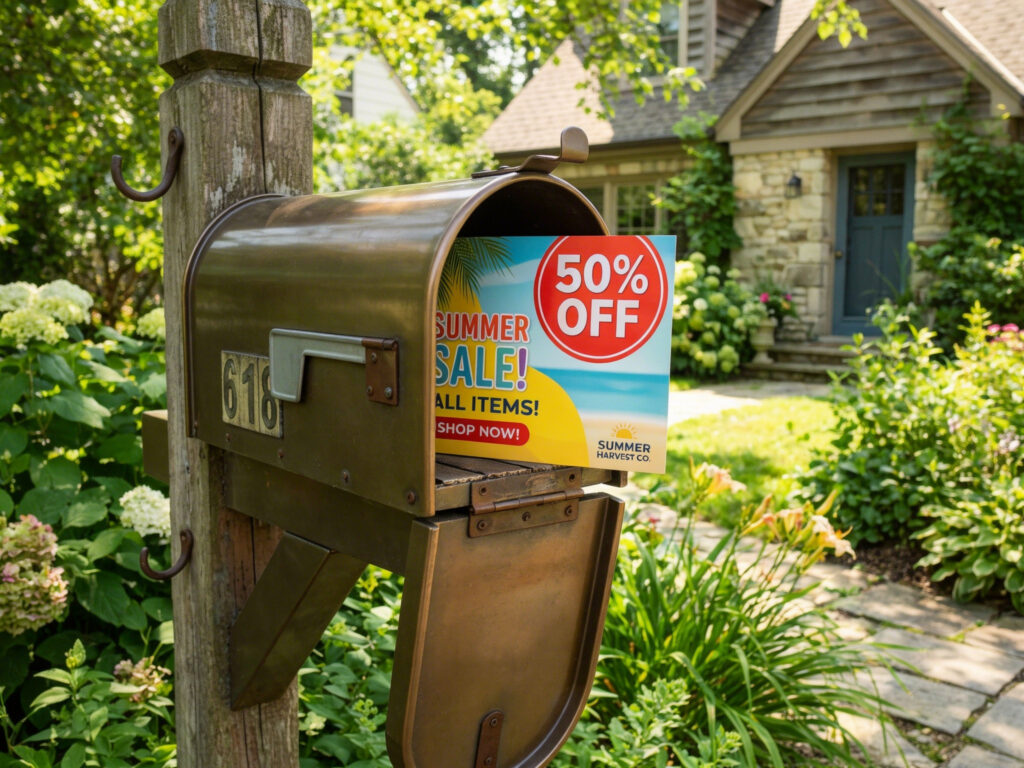
Even the best design and copy won’t work without a strong offer.
Effective offers often include:
- Discounts or incentives
- Limited-time promotions
- Exclusive access or bonuses
The key is to make the value obvious and the decision easy.
7. Design for Clarity and Attention
Design should guide the reader, not overwhelm them.
Best practices:
- Use clean layouts with clear hierarchy
- Highlight key information (headline, offer, call to action)
- Leave enough white space to keep it readable
- Use high-quality images that support the message
Your goal is to make it effortless to understand what you’re offering and what to do next.
8. Include a Clear Call to Action
Tell the reader exactly what to do—and make it simple.
Examples:
- “Call now to claim your offer”
- “Visit our store this weekend”
- “Bring this card for 20% off”
Avoid vague language. A strong call to action is direct, specific, and easy to follow.
9. Personalization Makes a Difference
Even small touches can significantly increase response rates.
Consider:
- Using the recipient’s name
- Referencing their location or past behavior
- Tailoring the message to specific segments
When people feel seen, they’re more likely to engage.
10. Timing and Consistency Matter
One mail piece can work—but a series works better.
Plan your timing strategically:
- Follow up with additional mailings
- Reinforce the same message across pieces
- Stay consistent in branding and tone
Repetition builds familiarity, and familiarity builds trust.
11. Track and Learn
Always measure performance so you can improve.
Track things like:
- Response rates
- Conversion rates
- Cost per acquisition
Use unique codes, dedicated phone numbers, or specific offers to identify what’s working. Then refine and repeat.
Final Thoughts
When you combine precise targeting, clear messaging, strong offers, and thoughtful design, direct mail becomes more than just a piece of paper. It becomes a tangible, memorable experience that drives actual results.